
Best Ingredients for Breakage That Work Hard
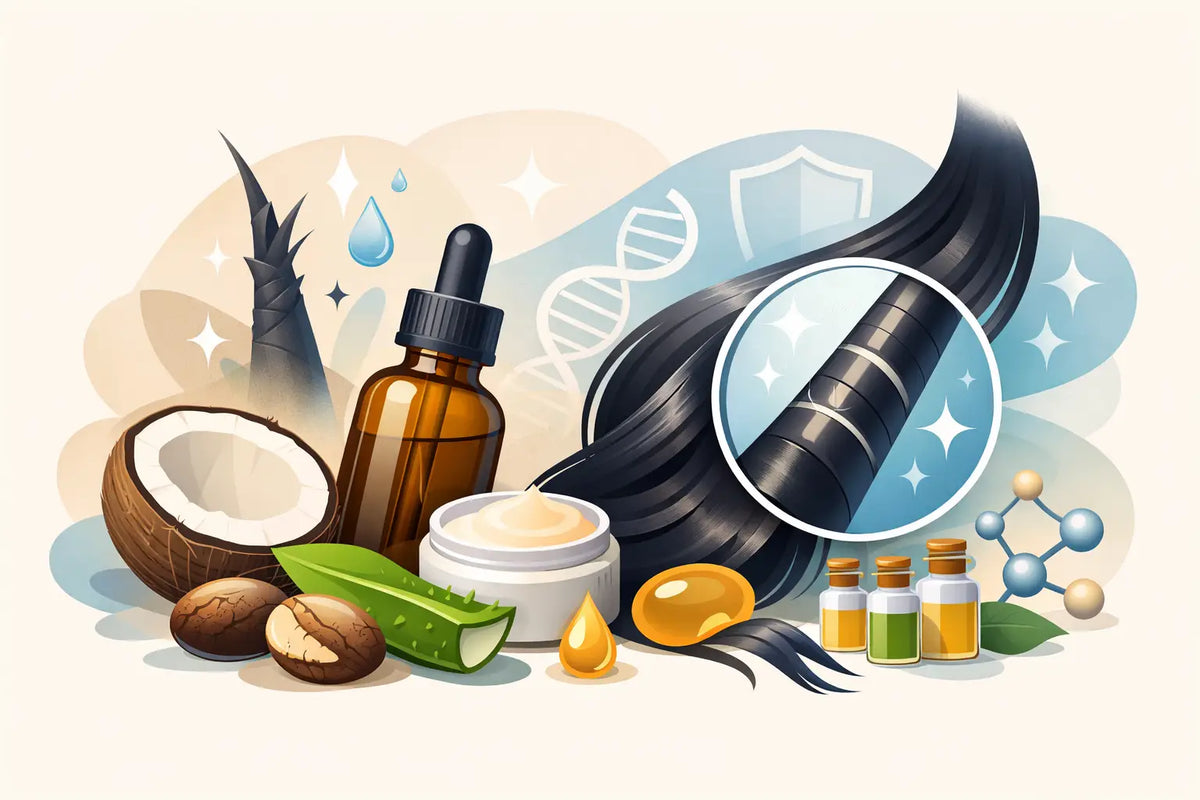
Hair that snaps on the brush, leaves short pieces around the sink, or feels rough from roots to ends can make every wash day frustrating. The best ingredients for breakage do not need to turn your bathroom into a lab. They support softer, more flexible-looking strands and help your routine feel less like damage control.
Breakage is not the same as shedding. Shed hairs usually come away from the root and often have a tiny white bulb at one end. Breakage happens along the hair strand itself, commonly where hair is dry, overworked, tangled or exposed to too much heat and tension. The goal is simple: choose ingredients that add moisture, reduce friction and help hair feel stronger without weighing it down.
Best Ingredients for Breakage: What to Look For
The right ingredient depends on what your hair is asking for. If it feels brittle and dull, moisture-focused ingredients are usually the first move. If it has become limp, stretchy or fragile after colouring or frequent heat styling, a careful balance of protein and conditioning ingredients may suit it better.
There is no single miracle oil or mask. Consistency, gentle handling and choosing products that suit your texture matter just as much as the label.
Hydrolysed proteins
Hydrolysed proteins, including hydrolysed keratin, wheat protein, rice protein and silk protein, are popular in strengthening shampoos, conditioners and treatments. They are broken into smaller pieces so they can coat the hair surface more easily, helping strands feel smoother, firmer and less prone to that overly soft, stretchy feeling when wet.
They can be especially useful when your hair has been regularly coloured, lightened or heat styled. But more is not always better. Hair that gets too much protein can start to feel stiff, dry or straw-like. If that sounds familiar, swap some strengthening treatments for a richer moisture mask and see how your hair responds.
Argan oil
Argan oil earns its place because it is lightweight enough for many hair types while still giving dry lengths a more polished finish. Rich in fatty acids and vitamin E, it is often used to soften the feel of hair, reduce the look of frizz and improve slip when styling.
Use a few drops through damp mid-lengths and ends before blow-drying, or smooth a tiny amount over dry ends after styling. Fine hair should start small. Too much oil can make it look flat rather than fresh.
Coconut oil
Coconut oil is a classic for dry, breakage-prone hair, particularly as a pre-wash treatment. Its fatty acid profile makes it a favourite for people wanting hair to feel more lubricated and protected through washing and detangling.
It is not a universal fit, though. Some hair types love the fuller, softer finish, while others find it leaves strands feeling coated or firm. If your hair is fine or easily weighed down, apply it sparingly to the ends only and wash thoroughly. A little goes a long way.
Shea butter
For coarse, curly or very dry hair, shea butter can be a game-changer for softness and manageability. It gives richer conditioning support, making it particularly helpful in creams, masks and leave-in products designed for textured hair.
Shea butter is best when your hair needs serious comfort, not when you want a weightless finish. If your roots become oily quickly, keep it away from the scalp and focus on the older, drier lengths where breakage tends to show up first.
Aloe vera
Aloe vera is a welcome ingredient when hair feels dry but you do not want a heavy treatment. It is commonly used in lightweight conditioners, scalp-friendly serums and leave-in sprays to add moisture and improve the feel of slip during detangling.
That slip matters. Less tugging means fewer opportunities for fragile strands to snap. Look for aloe vera in a leave-in product if your hair catches on brushes, combs or your fingers after washing.
Glycerin
Glycerin is a humectant, meaning it helps draw moisture to the hair. In the right formula, it can make dry hair feel softer and more supple, which is exactly what brittle lengths often need.
Australian weather can make this ingredient a little unpredictable. In humid conditions, glycerin may contribute to more visible frizz for some people. That does not make it a bad ingredient - it simply means it works best alongside smoothing oils, butters or conditioning agents that help keep the finish under control.
Panthenol
Also known as provitamin B5, panthenol appears in plenty of quality shampoos, conditioners and styling products. It is valued for its conditioning feel and can help hair look fuller, smoother and more hydrated without the heaviness of richer oils.
Panthenol is a smart choice for fine or thinning-looking hair that also breaks easily. You can get the comfort of a conditioning routine while keeping your style light and touchable.
Ceramides and plant-derived lipids
Ceramides and similar lipid ingredients help support the smooth, sealed-down feel of the hair cuticle. Think of them as part of the conditioning crew that helps rough, weathered lengths feel less abrasive against each other.
When hair fibres rub together, roughness can lead to tangles, frizz and snapping. A conditioner or mask with ceramides, plant oils or fatty alcohols such as cetyl alcohol and cetearyl alcohol can make a real difference to combing ease. Despite the name, fatty alcohols are not drying alcohols. They are creamy conditioning ingredients.
Ingredients That Need a Little Caution
Breakage-prone hair usually does not need harsher cleansing every day. Strong cleansing agents are not automatically bad, but frequent use can leave already dry lengths feeling stripped. If your hair feels squeaky after washing, that is often a sign to reach for a gentler shampoo and follow with conditioner every time.
Also watch how your hair reacts to heavy fragrance, frequent alcohol-heavy styling sprays and products that promise extreme hold. These can be useful for a particular look, but they may not suit a routine focused on softness and flexibility. Avoid assuming that “natural” automatically means gentle too. Essential oils and botanical extracts can smell beautiful, yet a formula still needs to suit your skin and hair.
Build a Routine That Gives Ingredients a Chance
The strongest ingredient list cannot compensate for aggressive brushing, scorching tools or tight styles worn day after day. Treat your routine as a team effort: moisture, strengthening support and kinder habits.
Start by shampooing the scalp rather than scrubbing the lengths. Let the lather travel down as you rinse, then apply conditioner from mid-lengths to ends. Detangle gently while conditioner is in, using fingers or a wide-tooth comb. After rinsing, press out water with a soft towel or cotton T-shirt instead of rubbing hard.
On damp hair, apply a leave-in with aloe vera, panthenol or lightweight oils for slip. Add a protein treatment only as often as your hair needs it, then finish with a cream or oil on the ends if they feel dry. Heat styling is fine when it suits your life, but keep temperatures sensible and use a heat-protecting product first.
If your breakage is concentrated around the hairline, reconsider tight ponytails, slick buns, extensions or anything that creates constant pulling. Swap them out regularly and give the same attention to your edges that you give your ends.
Choose for Your Hair, Not the Hype
A useful product should make your hair easier to manage after a few consistent uses. It should not leave it greasy, stiff, itchy or impossible to style. Start with one change at a time, such as a richer conditioner or a weekly strengthening mask, so you can tell what is genuinely helping.
For dry, coarse hair, look towards shea butter, ceramides and nourishing oils. For fine hair, panthenol, aloe vera and light protein formulas may offer a better balance. For coloured or heat-styled hair, rotate moisture-rich care with hydrolysed proteins rather than relying on either one alone.
Your hair has been through enough. Choose ingredients that make wash day gentler, styling easier and your lengths feel worth looking after. Small, steady changes can bring back the softer, stronger-looking finish that helps you feel confident wearing your hair your way.
Ready to start your regrowth routine?Shop the Complete System →