
Care for Menopause Thinning That Fits Real Life
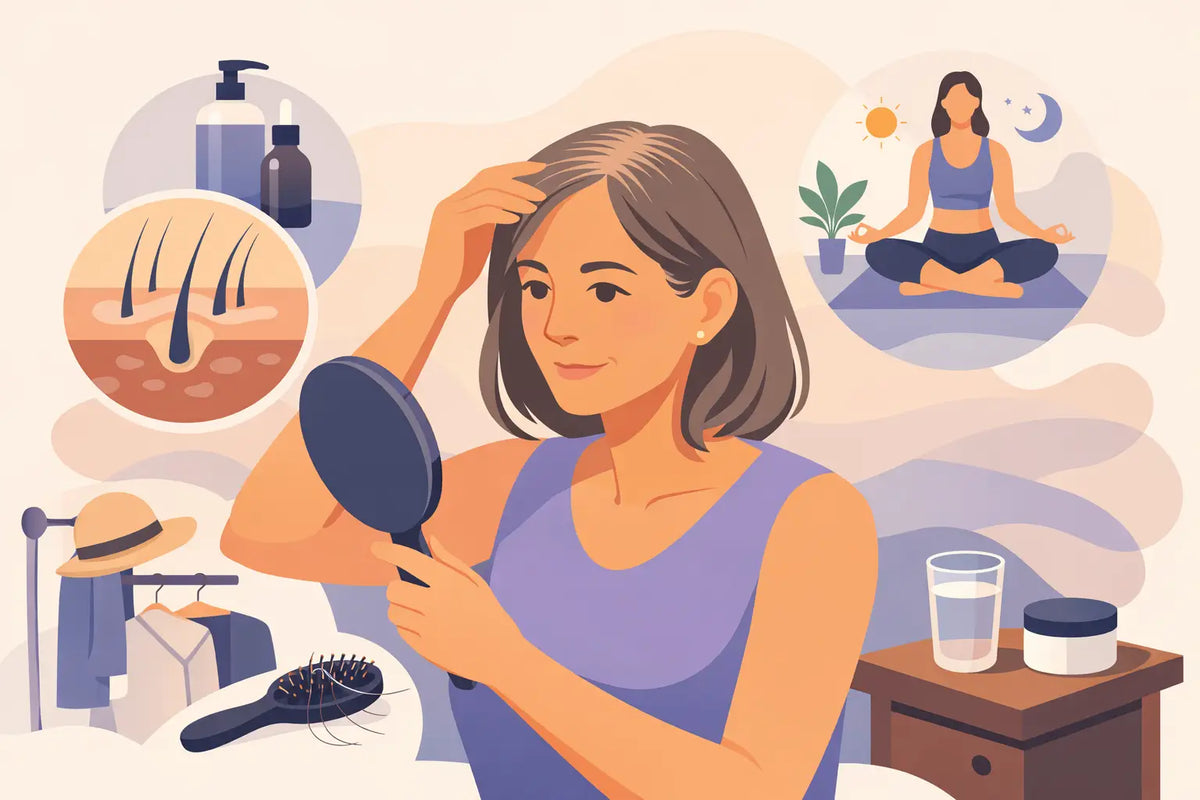
Hair that suddenly feels finer in your hands, looks flatter at the part, or leaves more strands in the brush can hit confidence hard. Care for menopause thinning is not about chasing a complicated fix or changing everything overnight. It is about giving your hair and scalp consistent, gentle attention while choosing habits that make your hair look and feel its best.
For many women, the years around menopause bring shifts that show up in the mirror and in the shower. Your usual style may not sit the same way. A ponytail can feel less substantial. The good news is that a practical routine can make a real difference to how supported, polished and in control you feel.
Why hair can feel different around menopause
Hair changes are rarely just one thing. Around menopause, many people notice that their hair seems less dense, drier through the lengths, more prone to breakage, or harder to style with volume. Genetics, everyday stress, sleep, nutrition, heat styling and haircare habits can all be part of the picture too.
That is why harsh, one-size-fits-all routines often disappoint. If your scalp feels dry, repeatedly stripping it with strong cleansers may leave hair looking dull. If your lengths are fragile, tight styles and high heat can make breakage more obvious. The strongest approach is usually a calm, steady one: care for the scalp, protect each strand and give your routine enough time to become a habit.
There is no need to treat thinner-looking hair as something to hide. A few considered changes can help you create the appearance of more lift and make styling feel far less frustrating.
Care for menopause thinning starts at the scalp
Think of your scalp as the base of every good hair day. It deserves the same gentle care you would give the skin on your face, without turning your bathroom shelf into a science project.
Cleanse without overdoing it
Choose a gentle shampoo that leaves your scalp feeling clean and comfortable rather than squeaky, tight or irritated. How often you wash depends on your hair type, activity level and how much product you use. Fine hair can look weighed down quickly, while dry or textured hair may prefer a little more time between washes.
Use the pads of your fingertips, not your nails, to massage shampoo across the scalp. Take a minute to work in small circles before rinsing thoroughly. This removes build-up gently and turns a rushed wash into a simple moment of self-care.
Conditioner belongs mainly through the mid-lengths and ends, where hair often needs softness and slip. If your roots tend to fall flat, keep richer formulas away from the scalp and rinse well. That small adjustment can help you retain movement without sacrificing hydration where it is needed.
Be selective with scalp treatments
Natural oils, botanical scalp products and lightweight serums can be a welcome part of a hair wellness routine, but more is not always better. Start slowly, use products as directed and pay attention to how your scalp responds. A product that leaves your hair greasy, itchy or heavy is not earning its place in the routine.
Look for a simple formula and give it consistent use before deciding whether it suits you. RegrowX offers natural hair wellness options designed to fit easily into this kind of no-fuss routine. The goal is not perfection after one wash. It is a scalp and hair ritual you can actually stick with.
Protect the hair you already have
When hair is fine or feels more fragile, protecting the lengths matters just as much as caring for the roots. Breakage can make hair seem thinner overall, particularly around the front, part line and ends.
Start with the way you detangle. Use a wide-tooth comb or a gentle brush, begin at the ends and work upwards in sections. Pulling from the roots through a knot can put unnecessary tension on strands that are already asking for a little more care.
Heat tools are not banned, but they work best with boundaries. Save the hottest setting for the rare occasion it is truly needed, always use a heat protectant, and avoid passing the straightener or curler over the same section again and again. A lower temperature and one deliberate pass usually looks better than a scorched, overworked finish.
Your hairstyle also counts. Very tight ponytails, buns and extensions can create constant pulling at the hairline. Rotate where you place your part and choose softer ties when you can. On days when you want your hair out of the way, a loose braid or low bun can be kinder than yanking it back tightly.
Build volume through smarter styling
The right cut and styling choices can change how much hair you appear to have without demanding an hour in front of the mirror. Blunt ends often make fine hair look fuller than heavily feathered lengths, while subtle layers can add movement where hair feels flat. What works best depends on your texture, face shape and the amount of time you genuinely want to spend styling.
For day-to-day volume, apply lightweight styling products at the roots rather than coating the whole head. Blow-dry with your head tipped forward or lift sections away from the scalp with a round brush. Once hair is dry, avoid repeatedly brushing it out. A little texture at the root can create a fuller-looking finish; too much handling can flatten it again.
Changing your part can also be surprisingly effective. If you always part your hair in the same place, shifting it slightly to the other side can create instant lift. It is a small move, but it is the kind of practical win that makes a routine feel worth doing.
Colour can be another styling tool, provided your hair is in good condition and your colour routine is gentle. Well-placed dimension can make fine hair appear more textured, while overly frequent lightening may leave lengths feeling rough. A skilled hairdresser can help you find a lower-maintenance option that works with your natural colour and your hair goals.
Support the routine beyond the bathroom
Hair does not exist separately from the rest of your life. Regular meals with a good mix of protein, colourful fruit and vegetables, whole grains and healthy fats support general wellbeing and give you a more reliable foundation for your self-care routine. Extreme dieting and constantly skipping meals are rarely kind to your energy levels or your haircare goals.
Rest matters too. You cannot remove every stressful moment from life, but a walk, a proper lunch break, a catch-up with a friend or a few quiet minutes before bed can help you feel more like yourself. The confidence piece is not superficial. When your hair routine gives you a sense of control, it can make a difficult transition feel more manageable.
Be realistic about timelines. Hair grows in cycles, and the appearance of your hair can vary from week to week depending on humidity, styling, washing and breakage. Take progress photos in similar light if you want a clearer view than the bathroom mirror gives you on a rushed morning.
Know when to get personal advice
A gradual shift in hair texture or fullness can be unsettling, but sudden or significant changes are worth discussing with a qualified health professional. The same applies if you have ongoing scalp discomfort or you simply feel worried about what you are seeing. Getting personalised guidance is a sensible form of self-care, not an overreaction.
For your everyday routine, keep the focus on what is in your hands: gentle cleansing, thoughtful styling, less tension and products that suit your hair instead of fighting it. You do not need a cupboard full of bottles to start making better choices.
Your hair may be changing, but your ability to feel good in it has not gone anywhere. Start with one small habit you can repeat this week, whether that is a gentler wash, lower heat or five unhurried minutes for your scalp. Consistency is where confidence starts to grow.
Ready to start your regrowth routine?Shop the Complete System →