
Hair Supplements Versus Treatments Explained
You notice it in the mirror, on the shower floor or when your hair no longer feels as full as it once did. The question is rarely whether you want to take action. It is where to start. In the hair supplements versus treatments conversation, the right answer is often less about choosing a single winner and more about choosing a routine you can genuinely stick with.
Hair concerns can feel deeply personal, but your next step does not need to be complicated. Supplements and treatments play different roles, suit different habits and come with different expectations. Understanding that difference makes it easier to spend your time and money with confidence.
Hair supplements versus treatments: the real difference
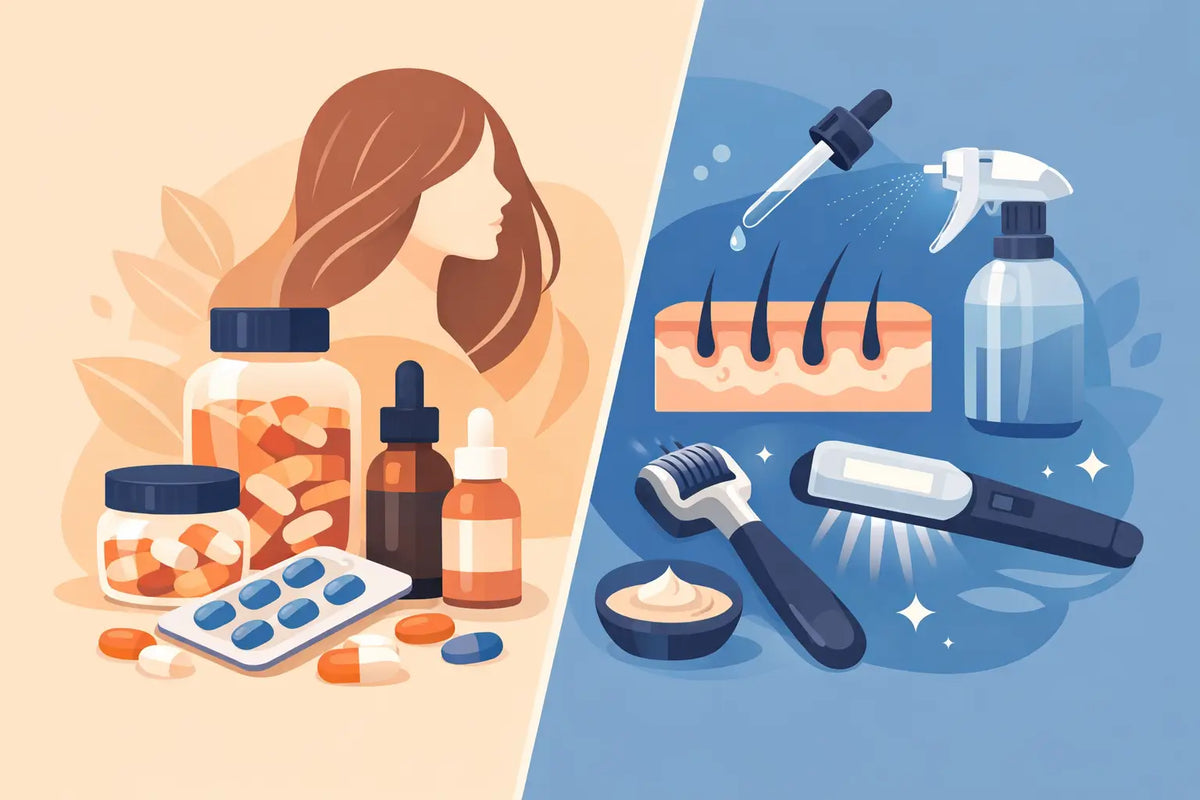
Hair supplements are taken as part of a daily wellness routine. They are generally designed to complement a balanced lifestyle and provide nutritional support through ingredients commonly used in hair, skin and nail formulas. Think of them as an inside-out habit: simple, consistent and easy to pair with breakfast or your usual morning routine.
Hair treatments are applied directly to the hair or scalp. Depending on the product, that may mean a scalp serum, oil, cleansing routine, conditioning treatment or leave-in product. Their appeal is immediate and practical. You are giving focused attention to the part of your routine you can see and feel.
Neither category is automatically better. A supplement may suit someone who wants a low-fuss daily step, while a topical treatment can be ideal for a person who enjoys a dedicated scalp-care ritual. Many people prefer both, provided the routine stays manageable.
The key distinction is this: supplements fit into your internal wellness routine, while treatments fit into your external hair-care routine. Both require patience. Hair has its own cycle, and no bottle can turn consistency into an overnight result.
When a supplement makes sense
A hair supplement can be a strong fit if you want to bring more structure to your daily self-care. It is especially useful for people who prefer one clear action each day rather than adding extra products around wash days, styling or busy mornings.
The best supplement routine is the one you will remember. That means checking the serving directions, choosing a time that works for you and keeping it somewhere visible. A product left at the back of the pantry cannot become part of your routine, no matter how good its ingredient list looks.
What to look for in a hair supplement
Start with transparency. You should be able to read the ingredients, understand the suggested use and see how the product fits into a sensible daily routine. Natural positioning may be important to you, but it should still come with clear product information and straightforward directions.
It also pays to keep the rest of your habits in view. Regular meals, adequate water, gentle hair handling and enough rest are not glamorous, but they make a far better foundation than constantly swapping products. A supplement works best as one part of a broader commitment to caring for yourself.
Be realistic about the experience, too. Supplements are not a shortcut around every possible influence on hair appearance. They are a steady routine choice, not an instant fix. If you take other supplements or have questions about whether an ingredient is appropriate for you, seek personalised advice before adding it to your day.
When a hair treatment makes sense
Treatments are for people who want to give their scalp and strands direct, regular attention. They can be particularly appealing if your hair feels dry, looks flat, tangles easily or has been through plenty of heat styling, colouring or tight styling routines.
A treatment may be used daily, a few times a week or around wash days, depending on its directions. The goal is not to pile on every product available. It is to choose a few products that feel good to use and support the look and feel you want from your hair.
Scalp products often suit those who like a hands-on routine. Applying a product slowly and massaging it in can become a moment of care rather than another chore. For some, that ritual is exactly what makes consistency easier.
Hair-length treatments, meanwhile, can be useful when your focus is softness, shine, manageability and protecting the look of your existing hair. If breakage from rough brushing, hot tools or over-processing is part of the picture, a gentler styling approach can make a visible difference to how your hair presents day to day.
Why treatments are not always the faster choice
It is easy to assume that applying something straight to the scalp must be more powerful than taking a supplement. That is not how a useful routine should be judged. The better question is whether you can use the product correctly and consistently without making your bathroom shelf feel like hard work.
Topical products also need to match your hair type and lifestyle. If you wash your hair only a few times a week, a formula designed for daily use may not suit your rhythm. If your hair is fine, a heavy oil may feel like too much. If you are always on the go, a quick leave-in product may be more realistic than a lengthy pre-wash routine.
There is no prize for the most complicated regimen. A simple cleanser, a suitable treatment and careful styling can be more useful than six products used inconsistently.
Can you use supplements and treatments together?
Yes, if it feels sustainable. Pairing a daily supplement with a topical hair or scalp treatment creates an inside-and-out routine without requiring your whole day to revolve around your hair. The trick is to introduce products thoughtfully rather than changing everything at once.
Start with one anchor habit. That might be taking your supplement with breakfast or applying a scalp treatment on Sunday, Tuesday and Thursday evenings. Once it feels automatic, decide whether a second step would genuinely add value to your routine.
Keep notes for a few weeks if you tend to buy products on impulse. Write down how often you used each product, how your scalp and hair felt, and whether the routine was easy to maintain. This helps you judge the experience based on your real habits, not on a single good or bad hair day.
Build a routine around your actual life
The best hair-care plan respects your schedule. A parent with ten quiet minutes after bedtime needs something different from a person who enjoys a full Sunday reset. Both approaches count.
For a minimal routine, choose one daily supplement if that suits you, use a gentle wash routine and limit the styling habits that leave your hair feeling stressed. For a more involved approach, add a scalp treatment several times a week and a conditioning step for the lengths of your hair.
Avoid the temptation to change products every few days. Give your chosen routine a fair, consistent run and follow each product's directions. If a product causes discomfort or irritation, stop using it. If a change in your hair feels sudden, significant or worrying, get personalised guidance from a qualified health professional rather than trying to solve every concern with another product.
Make your choice with confidence
Choose supplements when you want an easy daily wellness habit. Choose treatments when you want direct scalp or hair-care time. Choose both when you can keep the routine simple enough to repeat week after week.
RegrowX is built for people who want natural hair-care options without turning their routine into a confusing project. Start with the option that feels easiest to keep, then let consistency do the hard work. Your hair routine should give you a little more confidence when you face the mirror, not another reason to overthink your day.
Ready to start your regrowth routine?Shop the Complete System →