
How to Prevent Traction Hair Loss for Good
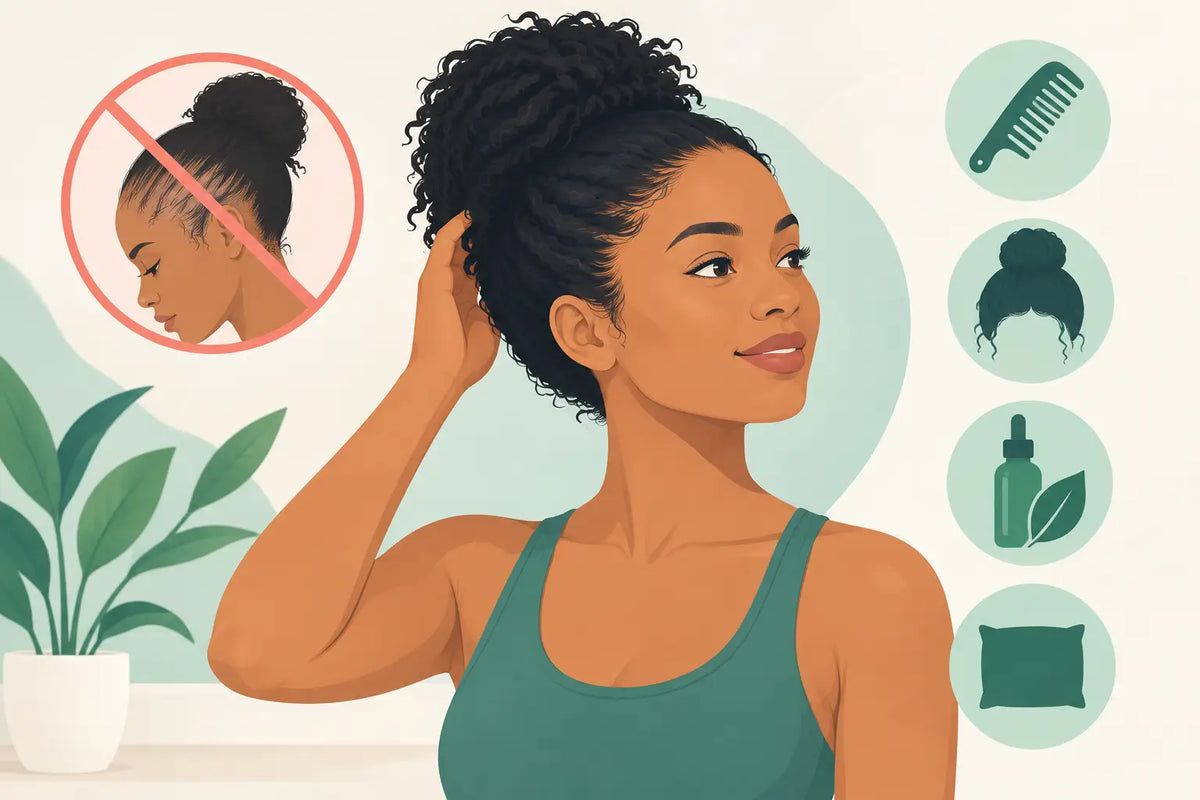
That sleek ponytail might look sharp for a night out, but wearing high-tension styles day after day can leave your scalp feeling sore and your hairline under pressure. Learning how to prevent traction hair loss is not about giving up braids, buns, extensions or polished styles forever. It is about changing the tension, timing and care around them so your hair gets a proper break.
Hair confidence is built in the small choices you repeat. A gentler routine can help you hold onto the styles you love while treating your strands and scalp with more care.
What causes traction around the hairline?
Traction happens when hair is consistently pulled tight from the root. Think slicked-back buns, high ponytails, tight braids, weaves, extensions, loc styles, headwear that rubs, or even the same part worn in the same position for months. The hairline, temples and nape are often the first places to feel it because those areas can be finer and more exposed.
The issue is rarely one hairstyle on one occasion. It is usually the repeat pattern: firm tension, long wear time and no recovery days. Add rough detangling, heat styling or hair that is already dry and fragile, and the strain can build faster.
A style does not need to look painfully tight to create too much pull. If you feel throbbing, tenderness, stinging or a headache after styling, your scalp is telling you the style needs adjusting. Small bumps along the hairline, broken hairs around the edges and a ponytail that feels uncomfortable are also signs to ease off.
How to prevent traction hair loss without losing your style
The fastest win is simple: loosen the base of the style. Whether you are booking braids, doing a slick bun before work or clipping in extra length for an event, the roots should never feel like they are being yanked. A secure style can still have movement.
Tell your stylist before they begin that comfort matters more than an ultra-tight finish. Ask for a softer perimeter around the hairline and temples, and speak up immediately if the tension feels wrong. Waiting for it to “settle” can mean wearing discomfort for days when a quick adjustment would solve the problem.
At home, avoid pulling every section to the same tight point. Move your ponytail lower, use a claw clip for a relaxed twist, or create a loose braid instead of a topknot. These options can still look put together while giving the most vulnerable areas a break.
Rotate where the pressure sits
Wearing a high ponytail every day puts repeated strain in the same place. Rotate between a low ponytail, loose braid, half-up style, down style and a soft bun. If you part your hair deeply on one side, switch sides occasionally or try a gentler centre part.
This does not need to become a complicated schedule. Just avoid making one tight style your default from Monday to Sunday. Your scalp deserves variety as much as your wardrobe does.
Give extensions and protective styles a sensible timeline
Braids, extensions and other long-wear styles can be practical and beautiful, but they are not meant to hurt. The right wear time depends on the style, your hair texture, how it was installed and how your scalp feels. If it becomes uncomfortable, excessively heavy or difficult to cleanse, it is time to reassess rather than pushing through for another week.
Be especially careful with added weight. Longer or fuller extensions may create more pull, even when the installation feels fine on day one. Choosing a lighter look, fewer pieces or a shorter length can make a meaningful difference without sacrificing the overall effect.
Stop sleeping in a tight style
A ponytail that feels manageable during the day can become uncomfortable when you lie on it for hours. Before bed, release tight elastics and opt for a loose braid, soft scrunchie or hair wrap that does not pull at the roots. A smooth pillowcase can also reduce the friction that comes from tossing and turning.
The goal is not perfection. It is simply to avoid eight extra hours of tension when your hair could be resting.
Start with a gentler wash and detangle routine
Preventing traction is not only about hairstyles. Hair that snaps easily is harder to style without pulling, so your wash-day habits matter too.
Begin detangling with patience. Work through the lengths first, then move gradually towards the roots rather than attacking knots from the top down. Use your fingers or a wide-tooth comb, and add a conditioning product that gives the hair enough slip to separate more easily. Pulling harder is never the answer.
When you wash, focus on cleansing the scalp without scrubbing aggressively through the lengths. Follow with moisturising care that leaves hair feeling softer and easier to manage. Dry hair often needs more force to brush, braid and gather, which is exactly what you want to avoid.
Heat can be part of your routine, but it comes with a trade-off. Frequent high heat can leave strands feeling less flexible, while adding a very tight style straight afterwards doubles down on stress. If you blow-dry or use hot tools, keep the temperature sensible, use a heat protectant and choose a low-tension finish afterwards.
Choose accessories that do not fight your hair
Tiny elastic bands, sharp clips and rough ties can catch or pull hair, particularly at the edges. Swap them for fabric-covered scrunchies, snag-free ties, smooth clips and wider headbands that distribute pressure more evenly.
Pay attention to how you remove accessories, too. Ripping out an elastic after a long day can undo all the care you put into styling. Take a moment to unwind the hair gently, especially when it is damp or tangled.
If you wear a helmet, cap, wig or headscarf regularly, check the fit. It should feel secure, not restrictive. Alternating how and where it sits can help reduce constant rubbing in one spot.
Build a routine you can actually keep
The best routine is not the most complicated one. It is the one you can repeat without second-guessing every step. Start by choosing two or three changes that suit your life: loosening your everyday ponytail, taking tight styles out before sleep, and giving your hairline a few no-tension days each week.
Natural hair wellness products can fit neatly into that routine by helping hair feel conditioned, manageable and cared for. RegrowX keeps the process straightforward for people who want supportive hair care without turning their bathroom shelf into a science lab. Choose products that suit your hair type, follow the directions and give your routine time to become consistent.
It also helps to rethink what “neat” means. A few softer pieces around the face, a lower bun or a less severe finish can look intentional, modern and far more comfortable. You do not need a painfully sleek style to look polished.
When it is time to change the plan
Do not ignore ongoing scalp discomfort just because a style looks good. Take it down, loosen it or switch to a low-tension option. If you notice persistent changes that worry you, seeking personalised advice from a qualified health professional can help you make an informed next move.
Your hair routine should support your confidence, not make you nervous every time you catch your reflection. Make comfort non-negotiable, wear the styles you enjoy with a lighter hand, and give your hair the breathing room it has been asking for.
Ready to start your regrowth routine?Shop the Complete System →