
Postpartum Haircare Guide for Shedding and Fullness
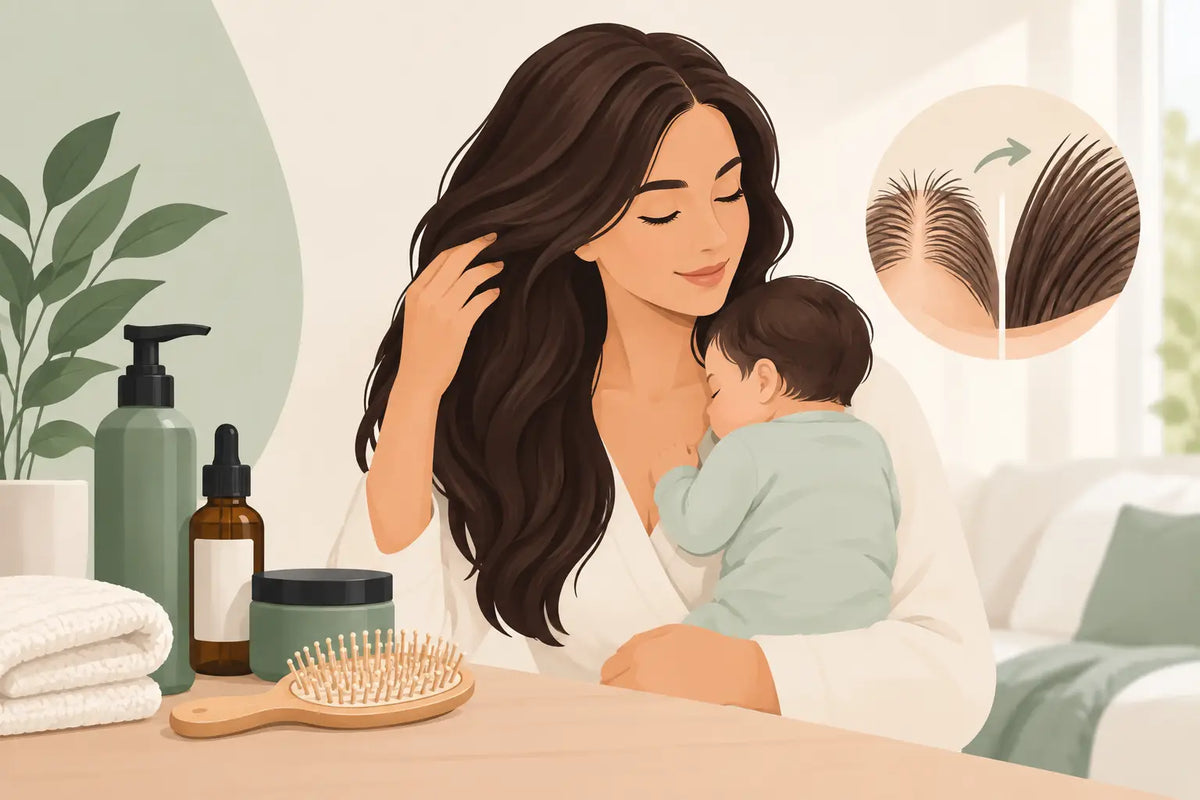
A new baby changes the pace of everything, including the time you have for your own routine. If extra hair is collecting in the shower drain or your ponytail suddenly feels less full, this postpartum haircare guide is for you. Post-baby shedding can feel confronting, especially when your appearance and confidence already feel different. The answer is not panic-buying every product on the shelf. It is building a gentle, consistent routine that makes hair care feel simple again.
Why hair can look different after birth
Many people notice their hair feels thicker during pregnancy, then see more strands than usual in the months after birth. That visible change can be frustrating, but it does not mean you have done anything wrong with your hair routine. Your body has been through a major transition, and your hair can reflect it.
The tricky part is that postpartum shedding is rarely neat or evenly timed. You may see more hair around the hairline, through the part, or when washing and brushing. For some people it is a short-lived annoyance. For others, the change lingers long enough to make styling feel like work.
What helps most is separating the things you can control from the things you cannot. You cannot force a rushed timeline. You can avoid unnecessary breakage, treat your scalp kindly, choose styles that create the look of more volume, and give your routine enough consistency to earn a fair chance.
The postpartum haircare guide: start with less stress
When hair looks thinner, the instinct is often to wash less, brush less, or avoid touching it altogether. But leaving your routine to chance can make wash day feel more upsetting. A better approach is gentle regular care.
Wash as often as your scalp and lifestyle need. If your roots feel oily, itchy or heavy with dry shampoo, a proper wash can leave your hair looking fresher and more lifted. If frequent washing makes your lengths feel dry, space it out and focus shampoo at the scalp rather than scrubbing the ends.
Use lukewarm water rather than very hot water, then massage shampoo over the scalp using the pads of your fingers. Keep it light. Aggressive scratching and rough towel-drying do not create cleaner hair - they create tangles, frizz and avoidable snapping.
After washing, press out water with a soft towel or cotton T-shirt. Do not twist or rub your hair into a knot. Apply conditioner through the mid-lengths and ends, where hair needs slip most, then detangle slowly with a wide-tooth comb or a flexible brush. Start at the ends and work upward. It takes an extra minute, but it is much kinder than pulling through a stubborn tangle from the roots.
Give your scalp a little attention
Healthy-looking hair starts at the scalp, yet this is the step most rushed routines skip. A few minutes of light scalp massage while shampooing can be a calming reset in a day that has probably involved very little downtime. Keep pressure gentle and use clean fingertips.
Avoid piling on heavy oils, thick masks or multiple styling products if your scalp feels congested or your hair falls flat quickly. Natural hair care does not have to mean using everything at once. The best routine is the one you can repeat without turning your bathroom shelf into a science experiment.
Keep styling easy on fragile strands
Postpartum life calls for practical hair, and a quick bun can be a lifesaver. The catch is wearing the same tight style, in the same place, every day. Constant tension around the hairline can make already delicate areas look worse.
Switch your style placement where you can. Try a lower, looser ponytail, a relaxed braid, a claw clip, or a soft fabric scrunchie instead of a tight elastic. If you like a slicked-back look, save it for occasional wear rather than making it your daily default. Your hair should not ache at the roots by lunchtime.
Heat styling also deserves a reality check. You do not need to swear off your blow-dryer forever, but turn down the temperature, use a heat protectant if it suits your routine, and avoid repeated passes with hot tools. Air-drying partway before blow-drying can reduce time under heat while still helping you achieve a polished finish.
Hair colour is another personal call. Some people want the instant lift of fresh colour after months of putting themselves last. Others prefer to wait until their hair feels easier to manage. If you colour your hair, be upfront with your stylist about recent shedding and ask for a low-maintenance option that avoids harsh handling and lets your natural regrowth blend in.
Create the appearance of more fullness
A fuller look is often about technique, not a dramatic overhaul. Change your part slightly, especially if you always wear it in the same place. A softer side part or a subtle zig-zag part can make sparse-looking areas less obvious without adding time to your morning.
Choose lightweight styling products over heavy creams when volume is the goal. Apply them mainly at the roots, then dry your hair with the airflow directed upward or with your head tipped forward for a moment. If you have time for only one styling step, focus it where it will show: the crown and the front sections around your face.
A haircut can make a genuine visual difference too. Blunt ends can make finer lengths look denser, while well-placed face-framing layers may add movement without sacrificing too much bulk. The right cut depends on your texture, length and how much styling effort you realistically have in you right now. Be honest about that last part. A high-maintenance cut is not a confidence boost if it never leaves the ponytail.
Build a routine you can actually keep
Your best postpartum routine may be three steps, not ten. Pick a gentle shampoo and conditioner you enjoy using, a simple detangling habit, and one styling option that helps you feel put together. Then stick with it long enough to understand how your hair responds.
If you want to add a natural-focused hair wellness product, introduce one thing at a time. This makes it easier to tell what fits your routine and what simply adds clutter. RegrowX keeps this approach straightforward: hair care should feel like a practical act of self-care, not another overwhelming job on your list.
Be wary of promises that make shedding sound like a personal failure with an instant fix. Hair has its own rhythm. A supportive routine can improve how your hair feels, looks and behaves day to day, but patience still matters. Take a photo of your part or hairline in the same light every few weeks if you are tempted to check constantly. Day-to-day comparisons can make small changes feel bigger than they are.
When it is worth asking for support
Most new parents have enough on their plate without trying to work out every hair change alone. If shedding feels very sudden, especially intense, continues to worry you, or comes with scalp discomfort, speak with your GP or a qualified health professional. They can help you discuss what is going on in the context of your wider wellbeing.
That is not admitting defeat. It is the same sensible move as asking for support with anything else that does not feel right after a major life change. You deserve clear answers and care that considers the whole picture.
For now, be gentle with your hair and with yourself. Your reflection may be changing, but you have not lost the right to feel polished, confident and like yourself. A calm wash day, a looser style and a routine you can keep are small acts - and they can make a very real difference to how you face the day.
Ready to start your regrowth routine?Shop the Complete System →